
Low-sulfur fuels have significantly reduced fog formation.
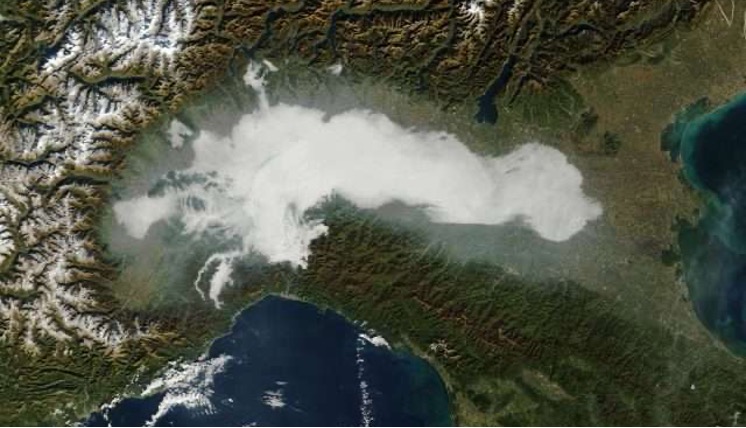
Fog forms when water vapor in the air condenses into tiny, suspended water droplets, creating a “cloud” at ground level. This typically occurs at night or early in the morning, when the ground releases heat, cooling the air above, often in humid conditions and with little wind.
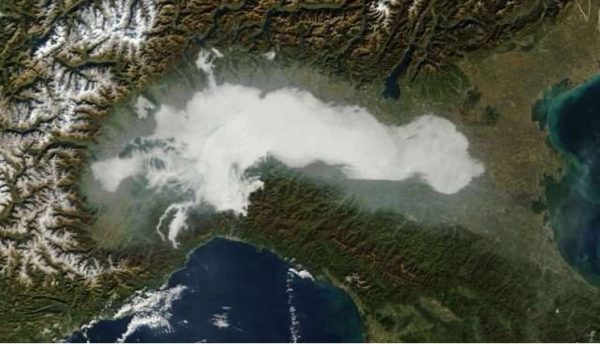
The Moderate Resolution Imaging Spectroradiometer (MODIS) sensor aboard NASA’s Terra satellite shows fog forming in the Po River basin in this image.
Fog formation is facilitated by the presence of aerosols in the atmosphere, which are particles suspended in the air with dimensions between 0.1 and 4 micrometers (millionths of a meter), which constitute the so-called “hygroscopic” or “condensation” nuclei.
These particles are primarily fine particulate matter (PM10 and PM2.5) and volatile pollutants such as sulfur compounds (SOx) and nitrogen compounds (NOx), resulting from both industrial processes and emissions from land and marine vehicles.
Saras has been producing very low-sulfur fuels (EN228 gasoline and ULSD diesel with sulfur levels below 10 parts per million) for decades, thus contributing to the reduction of photochemical smog and fog formation.
Thanks in part to low-sulfur fuels, for example, fog in the Po Valley has decreased by 47% since the 1990s.